Soft Window Treatments
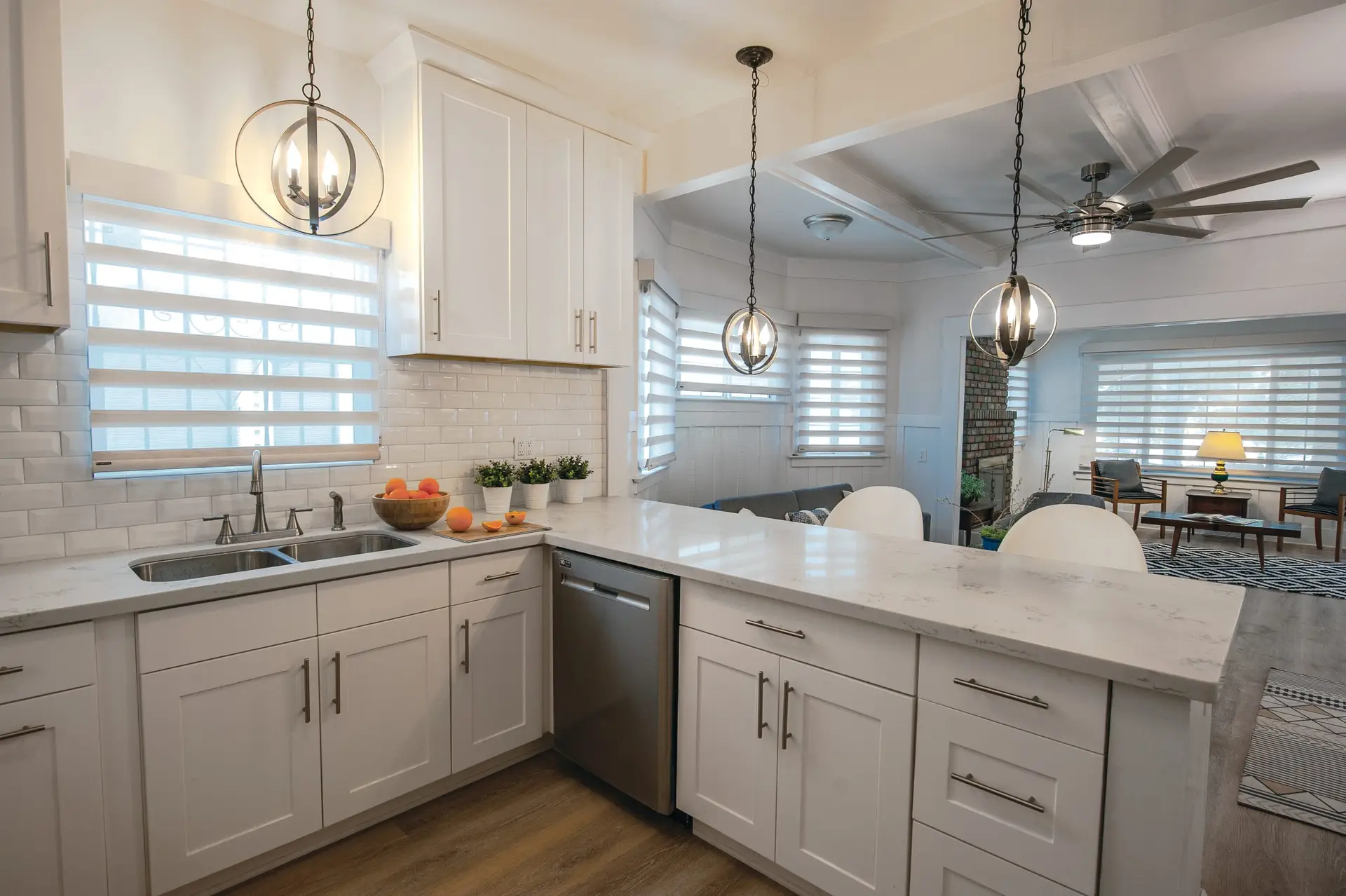
Layered sheers and drapery. Photo: Design Revelation of Florida.
The Short Answer
Pinch pleat, goblet and ripplefold headings each give drapery a different look, fullness and stack. Pinch pleats suit most rooms, goblets suit formal stationary panels, and ripplefold suits modern rooms and motorized tracks. In Florida, the lining matters as much as the pleat, because sun and humidity are hard on unprotected fabric.
The pleat style, sometimes called the heading, is the way fabric is gathered and finished at the top of a drapery panel. It decides how the folds fall, how full the panel looks, how much room it takes up when it is open, and what kind of rod or track it hangs from. Two panels sewn from the same fabric can look completely different with a different heading.
That is why pleat style is one of the first things Nancy talks through at a consultation, right alongside fabric. The heading has to suit the room, the window and how you plan to use the drapery every day. A panel you open and close twice a day needs a different heading than one that frames a window and never moves.
Most custom drapery in Florida homes uses one of five headings. Here is how they compare.
Pleat style
The look
Fullness
Best for
Works with motorization
Pinch pleat
Classic, tidy folds in groups of two or three
Full
Living rooms, bedrooms, most traditional and transitional homes
Yes, on a compatible track
Inverted pleat
Flat, tailored front with the folds tucked behind
Moderate
Clean, modern rooms and shorter windows
Sometimes; ask your designer
Goblet pleat
Rounded cups at the top, formal and dramatic
Full
Dining rooms and formal living rooms, usually stationary panels
Rarely; best for panels that stay put
Ripplefold
Soft, even S-shaped waves from top to bottom
Even, adjustable
Modern rooms, wide windows, sliding doors
Yes, it is the usual choice for motorized tracks
Tailored pleat
Pleats tacked at the very top, so the folds fall straight and crisp
Full
Contemporary and coastal homes
Yes, on a compatible track
Start with how the room feels. Pinch pleats are the most versatile heading and work in nearly any style of home, which is why they show up so often in living rooms and bedrooms. Goblet pleats add formality and height, so they suit a dining room or a two-story living room where the drapery is there to frame the windows rather than open and close all day.
For modern and coastal homes, ripplefold and tailored pleats give a cleaner line. Ripplefold hangs in a continuous wave that looks the same whether the drapery is open or closed, and it stacks back neatly beside the window, which matters on a wide sliding door where you want the full view of the lanai. If you are planning custom drapery for a living room or primary bedroom, Nancy will bring samples of each heading so you can see the difference in your own space.
How often will it move? Panels you open daily need a heading that glides and stacks easily. Stationary panels can be as formal as you like.
How much wall is beside the window? Fuller headings take more stack space when open. On tight walls, ripplefold or a tailored pleat keeps more of the glass clear.
How tall is the window? Tall glass shows off a heading. Goblet and pinch pleats add presence; ripplefold keeps a long run of fabric calm.
Will it be motorized? If yes, choose the heading with the motor in mind from the start.
Motorized drapery runs on a track rather than a decorative rod, so the heading has to suit the track's carriers. Ripplefold is the most common choice because its even spacing moves smoothly and stacks the same way every time. Pinch and tailored pleats can also be motorized on a compatible track, while goblet pleats are usually kept for stationary panels.
Explore
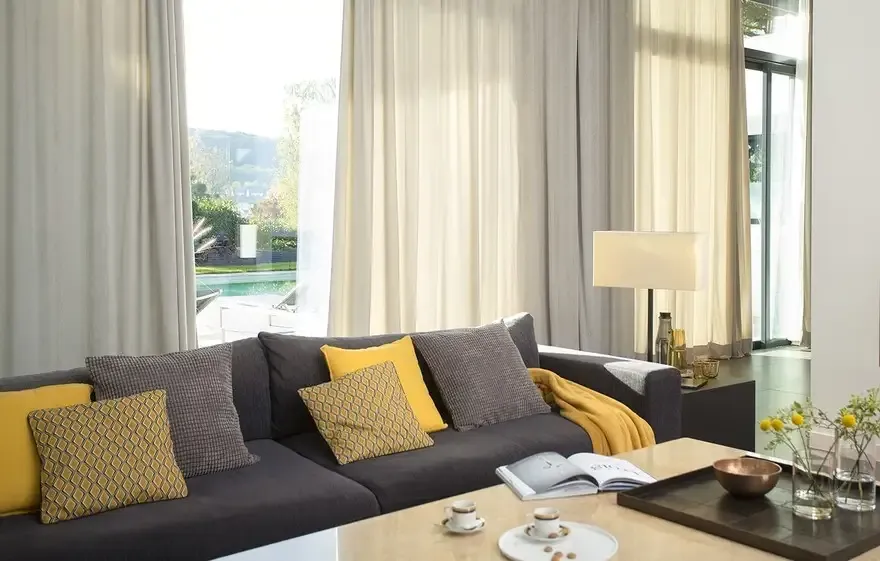
Custom drapery on a quiet motorized track, planned at a free in-home consultation.
If you are weighing motorization for tall windows or a wall of glass, read more about motorized drapes and how they are planned. The motor, track and heading are chosen together, so it is easiest to decide at the consultation rather than add a motor later.
In Florida, the lining is what keeps beautiful drapery looking beautiful. Strong sun fades and weakens fabric over time, especially on south and west windows, and humidity can make some natural fibers relax or shift in length. A lining protects the face fabric, helps it hang with more body, and changes how much light and heat come through.
Here are the linings you will hear about most, and what each one does.
Unlined. Best for sheers and light, airy fabrics where you want the glow of daylight. Keep delicate unlined fabrics away from the harshest afternoon sun.
Standard lining. The everyday choice. It shields the face fabric from UV, adds weight so the folds hang better, and gives the windows a finished look from outside.
Privacy lining. A denser lining that keeps silhouettes from showing at night while still letting some light through.
Blackout lining. Blocks nearly all light, which makes it the usual pick for bedrooms, media rooms and early Florida sunrises.
Thermal lining. Adds a layer that helps hold back heat at sunny windows, which can make west-facing rooms more comfortable in the afternoon.
Interlining. A soft layer sewn between the fabric and the lining for a richer, fuller drape. In northern climates it is mostly about warmth; here it is chosen for the look.
Designer Tip
Silk and other delicate fabrics are lovely, but Florida sun is hard on them. On a sunny west window, line silk well or pair it with a shade underneath, so the fabric is protected during the hottest hours of the day.
Yes, and in Florida it is often the best answer. A shade or sheer underneath handles glare, privacy and heat during the day, while the drapery frames the window and adds softness and color. Layering also takes some of the sun off the drapery itself, which helps the fabric last. Nancy can show you how drapery pairs with valances, cornices and other soft window treatments so each window is planned as one design.
Nancy comes to your home with fabric samples, pleat samples and lining samples, so you can see how each one looks against your walls and in your light. She measures every window, talks through how you use each room, and follows up with a clear written quote. If you would like to know more about the visit itself, read what happens at a free in-home window treatment consultation. Every product carries a 7-year warranty.
What is the most popular drapery pleat style?
Pinch pleats are the most common because they suit nearly any room and style of home. Ripplefold is the most popular choice for modern rooms and for motorized drapery.
What is the difference between pinch pleat and ripplefold?
Pinch pleats gather fabric into tidy groups at the top for a classic look. Ripplefold forms soft, even waves from top to bottom and runs on a track, which makes it the usual choice for wide windows, sliding doors and motorized drapery.
Do I need lined drapes in Florida?
For most fabrics, yes. A lining protects the face fabric from sun and fading, helps it hang better, and gives your windows a finished look from outside. Sheers are the main exception.
Is blackout lining worth it?
In bedrooms and media rooms, usually yes. Florida sunrises come early, and blackout lining blocks nearly all light. In living areas, a standard or privacy lining is often enough.
Can I choose a different pleat style for each room?
Yes. Many homes use a formal heading in the dining room and ripplefold in the family room. Nancy will help you keep the look consistent from room to room.
About the Author
Nancy, Licensed Window Treatment Designer
Nancy leads in-home design consultations for Design Revelation of Florida, helping Florida homeowners choose drapery, shades, shutters and motorization.
Keep Reading
Your free design visit awaits
Your designer brings fabric, pleat and lining samples to your home, measures every window, and recommends the right heading for each one. The consultation and estimate are free.